 Get QuoteBuyer Tools
The Foundry Collection
Industrial & StorageThe Residence Collection
Home FurnitureThe Hospitality Collection
Hotel FurnitureThe Campus Collection
University FurnitureThe Academy Collection
School FurnitureThe Studio Collection
Office FurnitureStaff Dormitory Beds: How Many Beds per Staff Room?
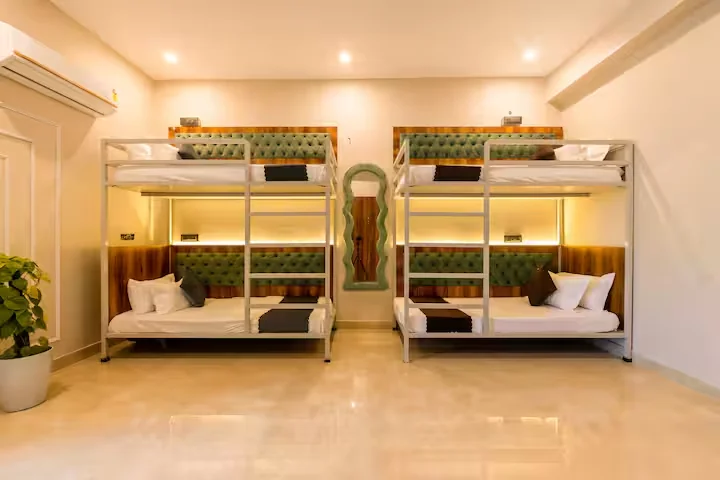
Most hotels plan two to four staff per accommodation room. Supervisors usually get single or twin rooms, and line staff share rooms of three or four, often on steel bunk beds so the floor stays free for storage and a walkway. The exact number depends on the room size, the local rules where the hotel operates, and the hotel's own or brand standard.
Typical Beds per Room by Staff Type
There is no single national rule in India for how many people share a hotel staff room, so most hotels set their own standard. The table below shows common practice.
| Staff type | People per room (typical) | Usual bed type |
|---|---|---|
| Managers and senior staff | 1 | Single bed |
| Supervisors and executives | 1–2 | Single beds |
| Line staff (housekeeping, F&B, security) | 2–4 | Steel bunk beds or single beds |
| Trainees and seasonal staff | 4–6 | Steel bunk beds |
Fewer people per room usually means better rest and fewer complaints, which matters for staff who work night shifts. Rooms of more than four are harder to keep quiet and tidy, so many hotels cap shared rooms at four.
How Many Beds Fit a Room?
A steel bunk bed for a standard 3 × 6 ft mattress takes up roughly 1.0 × 1.9 m of floor and sleeps two people. A single steel bed takes about the same footprint and sleeps one. Leave a clear walkway of about 750–900 mm in front of the beds, and space for each person's storage.
| Room size (approx.) | With single beds | With bunk beds | Space left for |
|---|---|---|---|
| 3 × 3.5 m | 2 people | 2 people (1 bunk bed) | 2 almirahs or lockers, a small table |
| 3.5 × 4 m | 2–3 people | 4 people (2 bunk beds) | 4 lockers or almirahs |
| 4 × 5 m | 4 people | 6 people (3 bunk beds) | 6 lockers, a walkway |
These are planning estimates, not rules. Doors, windows, columns and an attached bathroom change the answer. Our staff accommodation planner works out how many beds fit your room, and the bunk bed size guide gives mattress sizes and the heights between bunks.
Local Rules and Brand Standards
Before you fix the number of beds, check three things:
- Local rules. Some countries set minimum standards for staff and workers' housing. For example, Dubai Municipality has set a minimum sleeping area of 3.7 sq m per worker, and Qatar sets conditions for workers' accommodation under Ministerial Decision No. 18 of 2014. Rules change, so check the current version.
- Hotel or brand standards. International hotel groups often have their own standards for staff housing, covering people per room, storage and ventilation.
- Building rules. Fire exits, ventilation and ceiling height affect how many people a room can safely hold, and whether bunk beds suit it.
Bunk Beds or Single Beds?
Bunk beds double the number of people a room can take without using more floor, which is why they are common in staff quarters, hostels and worker housing. Single beds give more privacy and suit senior staff. Many hotels use both: single beds for supervisors and bunk beds for line staff and trainees.
- Check the ceiling height before choosing bunk beds. Leave at least 750–900 mm between the top of the upper mattress and the ceiling.
- Steel bunk beds with drawers under the lower bunk give each person storage without adding a wardrobe.
- Use the same bed and storage design in every room, so replacements and spare parts stay simple.
Storage per Person
Every staff member needs lockable storage for clothes and valuables. The right choice depends on the space left after the beds.
| Storage option | Best for |
|---|---|
| Under-bunk steel drawers | Small rooms where there is no space for a wardrobe |
| Steel locker (1 or 2-door) | Shared rooms of 3–6 people; one locker per person |
| Steel almirah or wardrobe | Rooms for 1–2 people, or staff who stay long term |
Staff also need lockers at work for uniforms. See our guide to hotel staff lockers for changing-room lockers by department.
Ordering from The Royal Safe Company
| What you need to know | Details |
|---|---|
| Products | Steel bunk beds with or without under-bunk drawers, almirahs, wardrobes and lockers |
| Material | Powder-coated mild steel from TATA Steel and JSW, made in our own factory in Sonipat, Haryana |
| Capacity | 300–400 beds or almirahs in 2–3 weeks on a bulk order |
| Minimum order | No minimum order in India; export minimum USD 3,000 |
| Prices | Quote-based, exclusive of 18% GST, delivery extra |
| Guarantee | 2 years in India, 1 year on export orders |
| Certification | ISO 9001:2015 and Greenpro |
| Export | UAE, Oman, UK, USA, Canada, Australia and New Zealand, shipped from Mumbai (Nhava Sheva) or Mundra |
See our guide to staff accommodation furniture for hotels, our page for worker and staff accommodation furniture, and the hotel staff accommodation case study.
Planning staff rooms for a hotel? Email your room sizes, the number of staff to house and your storage needs to sales@royalsafeco.com and we will send a layout and quotation.
Staff Accommodation Beds: Frequently Asked Questions
How many beds should a hotel staff accommodation room have?
Most hotels plan two to four staff per room. Supervisors often get single or twin rooms, while line staff share rooms of three or four, usually on steel bunk beds. The final number depends on the room size, local rules and the hotel or brand standard.
How much space does each staff member need?
Plan for the bed, personal storage and a clear walkway. A bunk bed for a 3 × 6 ft mattress takes about 1.0 × 1.9 m of floor for two people, and a walkway of about 750–900 mm in front of the beds is typical. In Dubai, workers’ housing rules set a minimum sleeping area of 3.7 sq m per worker.
Are bunk beds allowed in staff accommodation?
In India, bunk beds are widely used in hotel staff quarters and hostels. Some Gulf countries set their own rules for workers’ housing, including limits on people per room and bed types, so check the current local rules before you plan the layout.
What storage does each staff member need?
Each person needs lockable storage for clothes and valuables. This can be a steel almirah or wardrobe, a locker, or drawers under the lower bunk. In small rooms, under-bunk drawers can replace a separate wardrobe.
Can you supply beds and storage for a whole staff block?
Yes. The Royal Safe Company makes steel bunk beds with or without under-bunk drawers, almirahs and lockers in its own factory, and can make 300–400 beds or almirahs in 2–3 weeks on a bulk order.
What beds are best for a staff dormitory?
Steel bunk beds are the usual choice for staff dormitories, because they sleep two people in the floor space of one bed and stand up to daily use. Single steel beds suit supervisors and longer-staying staff. Add one locker or wardrobe per person.
Furnishing a full hotel? We work as a hotel FF&E supplier for guest rooms and back-of-house.