 Get QuoteBuyer Tools
The Foundry Collection
Industrial & StorageThe Residence Collection
Home FurnitureThe Hospitality Collection
Hotel FurnitureThe Campus Collection
University FurnitureThe Academy Collection
School FurnitureThe Studio Collection
Office FurnitureHow to Check the Quality of Steel Furniture Before Buying
Short answer: to check steel furniture quality, look at six things — sheet thickness (gauge), welds, powder coat, hinges, locks and how square the piece stands. Good steel furniture uses thick enough sheet that does not flex under hand pressure, has smooth continuous welds, an even powder coat of about 60–100 microns that does not chip, doors that close flush without rubbing, and a lock that turns cleanly. Ask for one sample and test it before a bulk order.
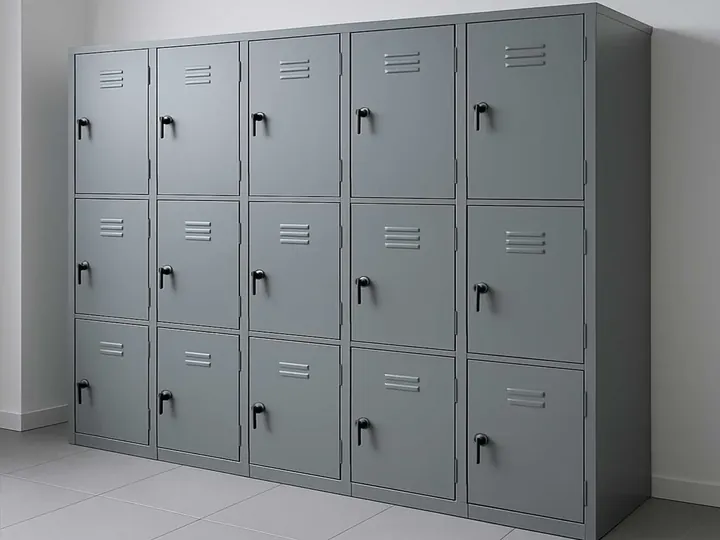
This checklist works for any steel furniture: almirahs (alamari), steel cupboards, lockers, filing cabinets, racks and bunk beds. You do not need special tools for most checks — a measuring tape, a coin and five minutes with a sample are enough.
1. Sheet Thickness (Gauge)
Steel sheet thickness is usually given as a gauge number. A lower gauge means thicker steel. Thin sheet is the most common way a cheap almirah or locker saves cost: it looks the same in a photo but dents, flexes and loosens over time.
| Gauge | Approx. thickness | Typical use |
|---|---|---|
| 16 gauge | about 1.5–1.6 mm | Heavy-duty frames, safes, load-bearing parts |
| 18 gauge | about 1.2 mm | Heavy-duty almirah and locker bodies, bed frames |
| 20 gauge | about 0.9 mm | Standard almirah, locker and cabinet bodies |
| 22 gauge | about 0.7–0.8 mm | Light-duty panels, shelves, back panels |
| 24 gauge and thinner | about 0.6 mm or less | Too thin for institutional or daily heavy use |
How to check: ask the supplier to write the gauge of the body, doors and shelves in the quotation. On the sample, press the middle of a side panel and a door with your palm — it should not flex or "oil-can" (pop in and out). Lift one corner: a well-made 2-door almirah feels solid and does not twist. If you can, measure the edge of a door or shelf with a vernier caliper. Ask what steel is used; cold-rolled mild steel (CRCA) from a known mill is a good sign.
2. Welds and Joints
Welds hold the frame together, so they decide how long the piece stays square. Look closely at the corners, the base frame and where shelves or rails are fixed.
| Good sign | Warning sign |
|---|---|
| Even, continuous or evenly spaced spot welds | Gaps, missed spots or welds only at a few points |
| Welds ground smooth before painting | Sharp spatter, lumps or burrs under the paint |
| No holes or bubbles in the weld bead | Pinholes (porosity) or cracks next to the weld |
| Reinforced base and door frames | Base made of a single folded sheet with no frame |
On bunk beds and racks, shake the assembled frame. It should not wobble at the joints. Bolted joints should use proper nuts and washers, not self-tapping screws into thin sheet.
3. Powder Coat Finish
The finish protects the steel from rust. Powder coating is tougher than liquid paint because the powder is baked onto the steel. What matters is that the steel was cleaned and pre-treated before coating and that the coat is thick enough.
- Look at it in daylight. The colour should be even, with no bare spots, runs or a rough "orange peel" texture on flat panels.
- Check edges and inside corners. Thin coating shows first on sharp edges, hinges and inside the almirah.
- Ask for the coating thickness. Institutional furniture is typically coated at about 60–100 microns. A supplier with a coating gauge can show you a reading.
- Ask about adhesion testing. A cross-hatch test cuts a small grid into the coat and checks that it does not flake off. A coat that peels from the grid was not bonded properly.
- Do a simple scratch check. On a hidden spot, press the edge of a coin firmly. A good coat marks slightly but does not flake to bare metal.
4. Doors, Hinges and Locks
Doors and locks are the parts used every day, so they fail first on poor furniture.
- Door fit: doors should close flush and line up with each other, with an even gap all round. They should not rub the frame or need lifting to close.
- Hinges: open and close each door 10–15 times. It should swing smoothly with no sag. Concealed or heavy piano/pin hinges welded or bolted to a reinforced frame last longer than light hinges fixed to thin sheet.
- Locks: the key should turn without force, and the door should not open with a pull when locked. On almirahs, check whether the lock throws rods into the top and bottom (multi-point locking), which holds a tall door better than a single latch.
- Inner locker (tijori): if the almirah has a locker compartment, check that it has its own lock and a separate key.
- Handles and edges: run your hand along the door edges and inside the shelves. There should be no sharp edges.
5. Shelves, Squareness and Load
Load a shelf with books or files on the sample. It should not bow in the middle. Shelves that are folded on all edges, or have a stiffener underneath, carry more weight. Stand the piece on a flat floor: it should not rock, and doors should not swing open on their own, which means the body is out of square. For racks and bunk beds, ask for the rated load per shelf or per bed in writing.
| Product | Extra check | Our guide |
|---|---|---|
| Steel almirah / steel cupboard | Door lock type, inner locker, shelf stiffness | Steel almirah buying guide |
| Steel lockers | Door fit on every compartment, ventilation, lock options | Institutional lockers guide |
| Hostel bunk beds | Tube size and wall thickness, guard rail, ladder | How to choose a hostel bunk bed |
| Storage racks | Rated load per shelf, upright thickness | Slotted angle rack load guide |
6. Common Mistakes When Buying Steel Furniture
- Comparing only price. Two almirahs that look the same can differ by two gauges of steel. Compare the written specification, not the photo.
- Skipping the sample. For any bulk order, approve one sample first and keep it as the reference for the rest.
- No specification in writing. Gauge, coating, lock type and size should be in the quotation, so the delivered pieces can be checked against it.
- Not checking on delivery. Open a few pieces from each batch and check doors, locks and finish before signing.
- Ignoring the guarantee terms. Ask what is covered, for how long and who you call for service.
Ordering from The Royal Safe Company
We manufacture steel almirahs, lockers, filing cabinets, storage racks, server racks, bunk beds and safes in our own factory, and we write the specification into every quotation so you can check delivered pieces against it.
| What you need to know | Details |
|---|---|
| Manufacturing since | 1934, fourth-generation family business |
| Factory | Own factory in Sonipat, Haryana, about 100 staff, in-house CNC and fabrication |
| Steel | Powder-coated mild steel from TATA Steel and JSW |
| Finish | Powder coat 80–100 microns, cross-hatch tested |
| Certification | ISO 9001:2015 and Greenpro |
| Guarantee | 2 years in India, 1 year on export |
| Price | Quote-based, exclusive of 18% GST; delivery extra; bulk orders get 10–20% discount |
| Lead time | Confirmed in writing with the quotation |
Want the gauge, finish and lock details in writing before you buy? Email the product, size and quantity to sales@royalsafeco.com and we will send a quotation with the full specification.
Checking Steel Furniture Quality: Frequently Asked Questions
How do I check the quality of steel furniture?
Check the sheet thickness (gauge), the welds, the powder coat, the hinges and locks, and whether the piece stands square. Press the panels for flex, open each door 10–15 times, load a shelf and ask for the specification in writing.
Which gauge is best for a steel almirah?
For daily use, an almirah body is typically 20 gauge (about 0.9 mm) or thicker; heavy-duty almirahs use 18 gauge (about 1.2 mm). A lower gauge number means thicker steel. Ask for the gauge of the body, doors and shelves separately.
What is a good powder coating thickness for steel furniture?
Institutional steel furniture is typically coated at about 60–100 microns. The Royal Safe Company applies 80–100 microns and cross-hatch tests the finish for adhesion.
How can I tell if a steel cupboard will rust?
Rust usually starts where the coat is thin or damaged: edges, welds, hinges and the base. Look for an even coat on these spots, ask whether the steel was pre-treated before powder coating, and ask for the coating thickness.
Should I ask for a sample before a bulk order?
Yes. Approve one sample, keep it as the reference, and check a few pieces from each delivery against it before signing.